Robust Design of a Paper Cone-Rotor
Overview
Applied Taguchi robust-design methods to a paper multi-bladed cone-rotor flier to maximize flight (hang) time — a larger-the-better response — while reducing variation caused by uncontrollable noise, then validated the optimum against the original design.
Key points
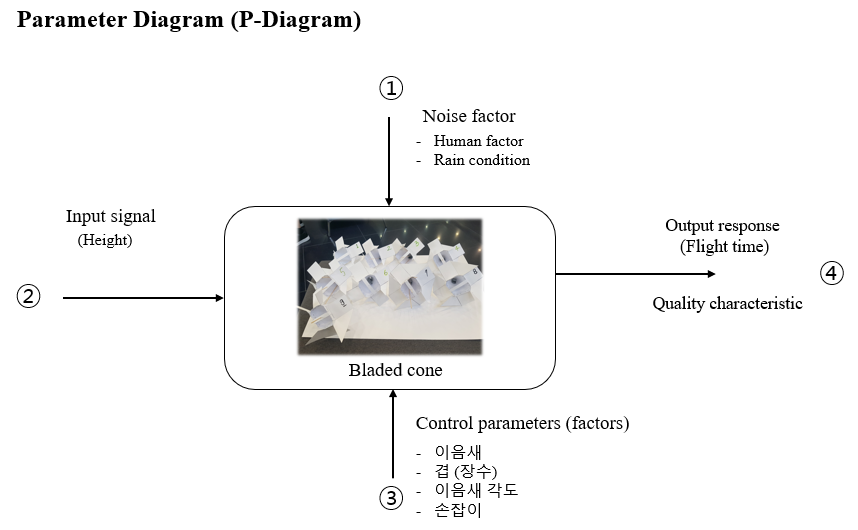
- Built a P-diagram: signal = drop heights (2 / 2.8 / 4.9 m); two noise factors (thrower, rain); four control factors (seam-length ratio, seam angle, hand grips, wing stiffness), three levels each.
- Used an L9 (3⁴) orthogonal array; computed the dynamic S/N ratio and slope (β); selected optimal levels via ANOM and ranked factor influence via ANOVA.
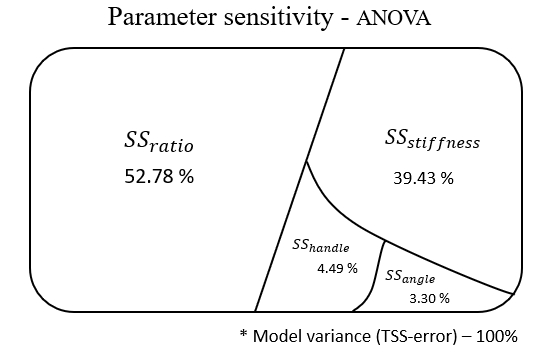
- ANOVA showed seam ratio (52.8%) and stiffness (39.4%) dominated; optimum = seam ratio 1:1, 30° angle, 0 grips, 1 paper layer.
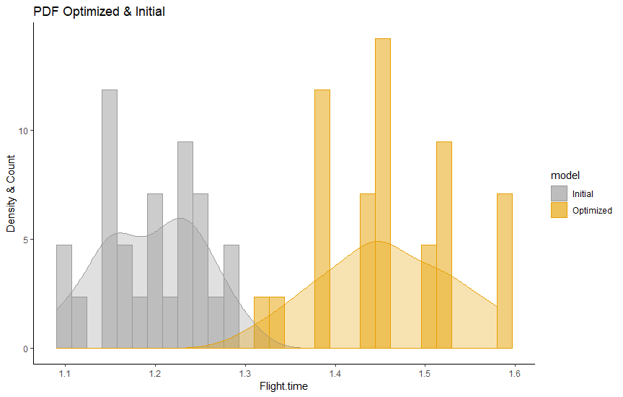
- The optimized model raised the slope 0.434 → 0.482 (better mean flight time), trading some S/N robustness (σ 0.419 → 0.490).
- Proposed a wingless conical helical-seam design to cut weight while keeping stability.
Figures